Golf has a way of humbling even the best. One day you’re draining birdie putts and holding trophies, and the next, you’re staring at the wrong side of the cut line. Over the years, some of the biggest names in the sport have quietly slipped off the leaderboards, leaving fans wondering, “What happened?” Let’s shine a light on a few stars who’ve taken a tumble, explore why they’ve fallen, and ask the big question: Can they climb back to golf’s upper echelons? This article will be about DJ, more coming soon!
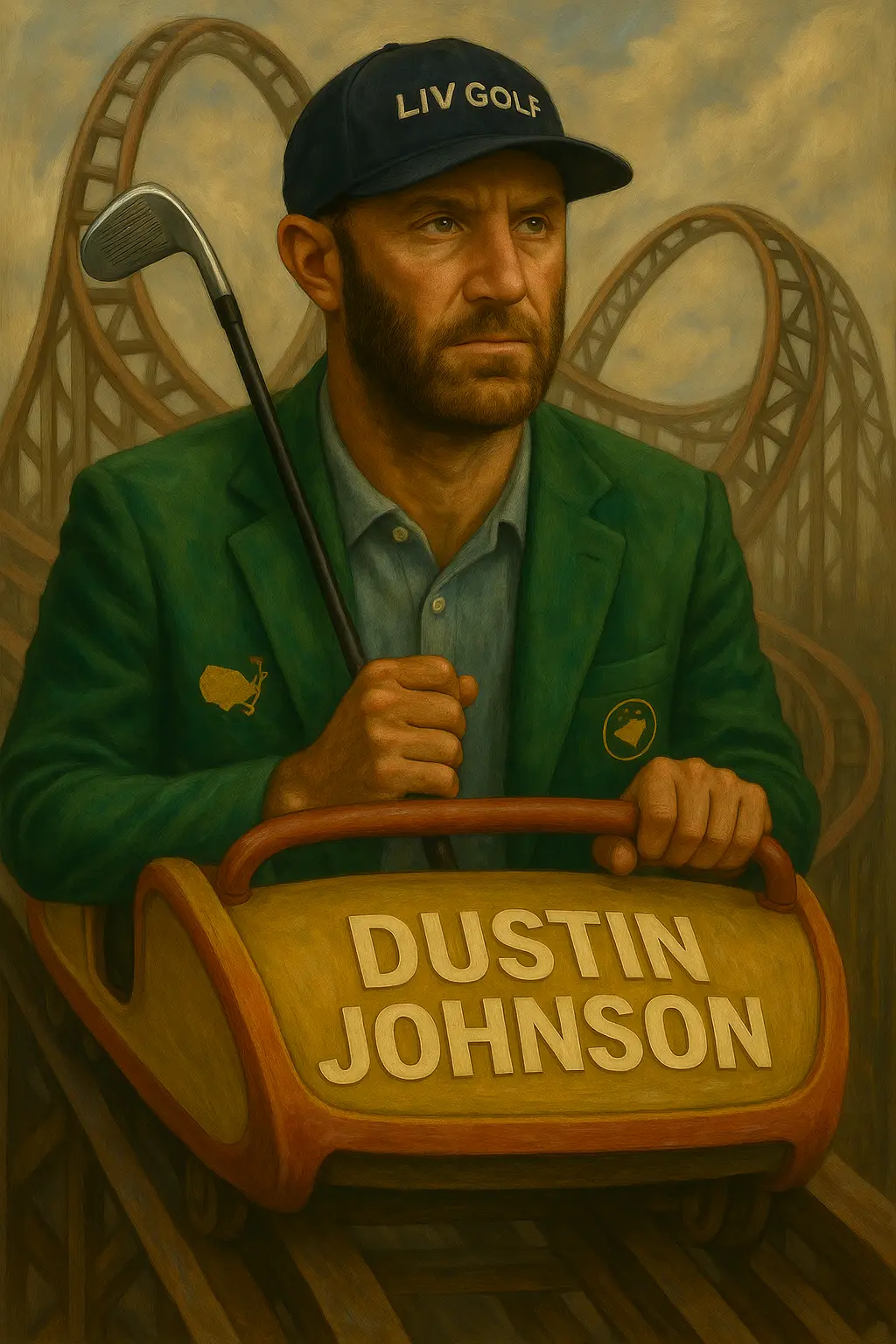
Dustin Johnson’s Descent
Here’s the thing about Dustin Johnson—when he was hot, he was on fire. We’re talking 24 PGA Tour wins, two majors, more money than you can count even if you used both hands, and a place at the very top of golf’s food chain. His 2020 Masters win? Legendary. He didn’t just win; he turned Augusta National into his personal highlight reel, finishing 20-under-par like it was no big deal. Back then, you didn’t just see DJ on leaderboards. He was the leaderboard. But as the saying goes, the higher you climb, the harder the fall.
And fall he did, though not all at once. It started in 2022, when Johnson signed with LIV Golf for a jaw-dropping $125 million. Why wouldn’t he? It was a private jet-powered payday. But while the money was nice, the competitive edge? Not so much. LIV’s guaranteed pay structure and smaller fields took the do-or-die pressure out of the equation. Without the grit-inducing grind of a PGA Tour schedule, Johnson might’ve gotten too cozy. Too chill. Suddenly, the guy nicknamed “DJ” started spinning an entirely different type of tune.
Fast-forward to today, and the stats paint a grim picture. His world ranking has tanked into the 600s (no, that’s not a typo), and his performances at key events tell the same story. Just look at the 2025 Masters, where he missed the cut for the third time in five years. And this was Augusta, the site of that historic triumph. It was like watching a rockstar performing in an empty bar. Painful. Even DJ’s body language seems less “cool confidence” and more “meh, it happens.” He says, “I’m playing better than I scored,” and “All it takes is one good round,” but fans are left wondering if those are just words.
Still, the guy isn’t done yet. He’s got a lifetime pass to the Masters as a past champion, and he’ll show up, no doubt. The problem? His exemption window for other majors is closing fast. For the U.S. Open and The Open Championship, this might be his last ride unless the old magic resurfaces.
Why This Isn’t Just About Golf
Here’s where it gets interesting. Johnson’s story isn’t just a sports drama; it’s a cautionary tale about legacy versus luxury. Sure, Dustin’s move to LIV Golf fattened his wallet, but at what cost? Once one of golf’s coolest, most formidable stars, he’s now a cautionary tale for what happens when the drive to compete gets replaced by the comfort of guaranteed cash.
And yet, there’s still a chance for redemption. Golf is as much about reinvention as it is about victory. People love a good comeback story, and DJ’s got that laid-back swagger that makes you want to root for him. If he can recapture even a slice of his fire, he could rewrite his narrative. But make no mistake, the clock is ticking. Golf doesn’t wait for anyone, even someone as talented as Johnson.
So, can Dustin Johnson do it? Can he make the leap from LIV’s low-pressure, high-payout setup back to the grind and glory of competitive golf? It’s a tough ask, but if anyone’s got the skills to pull it off, it’s him. Now, all he needs is that one good round…and a whole lot of others to follow.
Why Stars Fade
It’s not just DJ, of course. Golf’s history is packed with names that rose dramatically, only to fade just as fast. The reasons vary, but a few themes keep popping up.
1. Aging Happens, Even to Pros:
Yes, yes, 40 is the new 30, but don’t tell that to your swing speed. Over time, even the most athletic of players lose just a touch of power and flexibility. Suddenly, a par-5 that was once driver and a 7-iron is now a driver and a 5-wood. Ask Phil Mickelson about maintaining competitiveness into your golden years. It’s not impossible, but it sure takes effort.
2. The Head Game:
Think golf isn’t stressful? Imagine standing over a 4-footer for par knowing it might cost you $50,000 if you miss. The mental grind of golf is relentless. Burnout is real, and the pressure to perform—even when your game isn’t clicking—is enough to shake anyone’s confidence.
3. LIV Golf’s Pajama-Like Comfort:
When guaranteed paydays replace the urgency of making cuts and climbing leaderboards, it’s no wonder some players burn out competitively. Sure, the money is great, but the allure of the chase? That’s a little harder to find when the stakes are more exhibition than cutthroat.
Stories of Resilience
The good news? Professional golf loves a comeback. Just ask Tiger Woods, who clawed his way back from injuries and scandals to win the 2019 Masters. Or look at Ben Hogan, who turned a near-fatal car accident into motivation to win six more majors. These stories remind us that getting knocked down isn’t the end.
Resilience is key, and the players who find it often rely on three things:
- A Mental Reset: Shifting from a slump mindset to one of gradual improvement can be transformational. It’s about building momentum, not expecting miracles overnight.
- Physical Dedication: Losing a few yards on your drive? Time to hit the gym. Building strength and flexibility can help fight the creep of Father Time.
- A Solid Support Team: Great golfers don’t just lean on their caddies; they rely on coaches, trainers, and mental health pros to glue it all together.
Comebacks on the Cards?
At 40, Dustin Johnson still has a bit of runway left, though it’s not endless. Statistically speaking, players over 40 rarely dominate unless they find ways to reinvent themselves. Phil Mickelson winning the PGA Championship at 50 is the exception, not the rule.
For DJ, his road back to major contention would require rediscovering that gritty competitiveness and hunger to win. The skillset is still there. The question is whether he can turn his laid-back “I’m fine” persona into a more focused “I’m here to win” approach.
And what about others who’ve vanished? Whether due to age, injuries, or mental fatigue, golf’s long career arcs mean opportunities to bounce back are always possible—but seldom easy. The road to redemption demands persistence, patience, and, quite frankly, a lot of birdies.
A Final Thought
Golf is as much about the comeback as it is the collapse. Fans love to cheer for redemption and second acts, and the sport offers plenty of room for those who are willing to fight for it. The leaderboard may look different these days, but as we’ve seen before, nothing stays static in golf. Anyone, even a fallen star like Dustin Johnson, could surprise us yet.
Keep an eye on the fairways, folks. The next “one good round” might just lead to a story for the ages.
If you have a recommendation for a golfer to add to the list please post a comment and we will dig into them.